Trang

Hiển thị các bài đăng có nhãn PHONES. Hiển thị tất cả bài đăng

Thứ Ba, 11 tháng 12, 2012

Picture of Nokia Lumia 620 in Vietnam


LUMIA-620-1-jpg[1186083644].jpg
Screen with ClearBlack technology for better viewing angles in the sun.
LUMIA-620-2-jpg[1186083644].jpg
The back cover of the machine made ​​from polycarbonate and have a variety of colors can be replaced.

Thứ Năm, 13 tháng 9, 2012

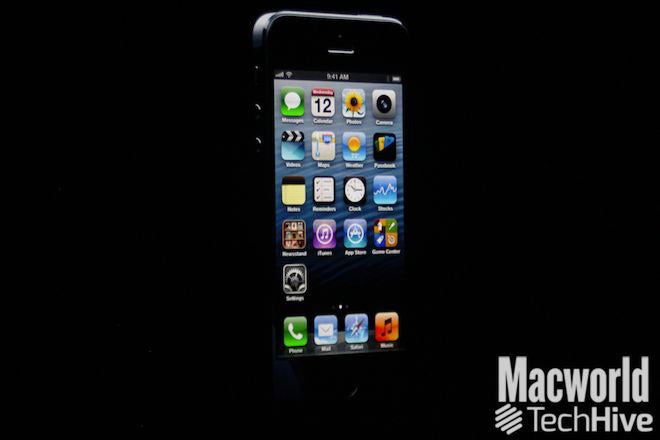
Apple announces iPhone 5


As was widely expected, Apple on Wednesday unveiled the iPhone 5, the newest entrant into its smartphone lineup. The iPhone 5 sports a taller screen, a new dock connector port, LTE support, and other refinements.
Phil Schiller, Apple’s senior vice president of worldwide marketing, took the wraps off the new iPhone for press gathered at the company’s San Francisco event, calling the device “the most beautiful product we’ve ever made, bar none.”
The iPhone 5 is made entirely of glass and aluminum, Schiller said, adding that the “exacting level of standards” exhibited by the phone is Apple’s best hardware engineering to date.
It’s the thinnest and lightest iPhone, at 7.6mm thin, and 112 grams. Schiller said those measurements make it the world’s thinnest smartphone. The iPhone 5 is also volumetrically smaller than the iPhone 4S.

The screen

The iPhone 5 keeps the Retina display moniker, but it’s taller than the screens on iPhones that preceded it. The display offers 326 pixels per inch, with a 4-inch screen and 1136 x 640 resolution.
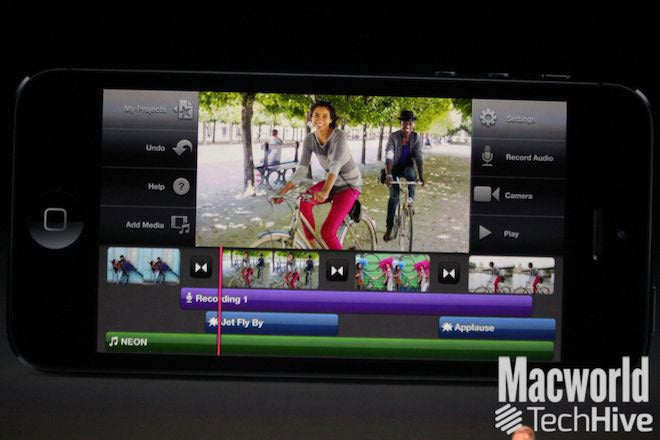
There’s now a fifth row of icons on the taller home screen, and all of Apple’s native apps, along with the iWork and iLife suites, have been updated on the iPhone 5 to take advantage of the larger display.
The Calendar app in landscape shows five days instead of three on the iPhone 5, for example.
Apps that aren’t updated don’t stretch or scale, Schiller said. Rather, such apps will display letterboxed on the iPhone, with black borders surrounding the centered app.
Schiller showed off apps from CNN and OpenTable, each of which had been updated for the taller iPhone display, adding in new content. In OpenTable’s case, Schiller said, the developers added some of the iPad app’s interface element, since the iPhone 5’s 4-inch screen afforded more space for such niceties.
The iPhone 5 offers 44 percent more color saturation than the iPhone 4S, Schiller said, and because the touch sensors are integrated right into the display, it’s 30 percent thinner, with sharper imagery, and less glare in sunlight.

Ultrafast wireless

New to the iPhone 5 is LTE, HSPA+, and DC-HSDPA support. That’s on top of the GPRS, EDGE, EV-DO, and HSPA that the iPhone 4S offered. Schiller said that with LTE, the iPhone 5 can achieve a “theoretical maximum downlink of up to 100Mbps.”
Schiller explained that the iPhone 5 uses one baseband chip for voice and data and a single radio chip. The new phone also improves upon the iPhone 4S’s dynamic antenna, Schiller said, improving its ability to automatically switch to different networks as appropriate.
LTE partners for the iPhone 5 include Sprint, AT&T, and Verizon in the U.S, and Rogers, Fido, Bell, Telus, and more in Canada. Schiller said there are “plenty” of LTE partners in Asia, Australia, the UK, and Germany, with lots of DC-HSDPA support in Europe as well.
The iPhone 5 also gains better Wi-Fi, with support for 802.11 a/b/g/n. The 802.11n standard is 2.4GHz and dual channel 5GHz, up to 150 Mbps, Schiller said.

A6 processor

The processor in the iPhone 5 is the brand new Apple A6, which is twice as fast at CPU and graphics processing compared to the A5 that drove the iPhone 4S, Schiller said. It’s also 22 percent smaller than its predecessor, freeing up more space inside the iPhone, and making it more energy efficient to boot. Schiller said that everything—launching apps, viewing attachments, loading music—would be twice as fast as before.
Schiller invited EA to show off what the A6 chip meant for them; EA debuted Real Racing 3, which included real-time reflections, functional rear view mirrors, and “console quality” graphics, according to EA Studios’s Rob Murray. (The game will hit the App Store later this year.)

The battery

Schiller explained that Apple wanted “to match the battery life of the 4S in a thinner and lighter design” for the iPhone 5. The company ended up exceeding that battery life; the iPhone 5 will offer eight hours of 3G talk time and browsing and LTE browsing, ten hours of Wi-Fi browsing, ten hours of video, 40 hours of music, and 225 hours of standby time.

The camera

The iPhone 5’s camera sports an eight megapixel sensor, 3264 by 2448 pixel images. It’s backside illuminated, with a hybrid IR filter, five-element lens, and a fast f/2.4 aperture. And the camera is 25 percent smaller than the iPhone 4S’s camera. The camera also includes a dynamic low-light mode, which can sense low light and combine elements for two f-stops greater.
The camera also includes, for the first time on an iPhone, a sapphire lens cover, which Schiller said would protect the lens and make images cleaner and sharper.
The A6 chip includes a new image signal processor, with spatial noise reduction and filtering to improve photographs. And the camera’s now 40 percent faster, too.
Also new in the iPhone 5’s camera arsenal is Panorama. You hold the iPhone vertically and sweep your scene; the app tells you at what speed to move. “Even if you’re not perfectly stable,” or if movement artifacts are introduced, Schiller said, the software can compensate in the final image.
Video performance is improved, too. The iPhone 5 offers 1080p HD video, improved video stabilization, face detection for up to ten faces, and can take photos while you’re recording video. The front-facing camera is now a FaceTime HD 720p HD camera with backside illumination, a significant improvement over the iPhone 4S’s VGA-quality front-facing camera.

Audio

The iPhone 5 includes three separate microphones, Schiller said: One on the front, one on the back, and one on the bottom. They improve noise cancellation and voice recognition.
The speaker gets improved, too. It now includes five magnets in its transducer, with better frequency response and better sound—while being 20 percent smaller than the speaker in the iPhone 4S. The earpiece is now noise-canceling, too, Schiller said.
With some carriers, the iPhone 5 will support wideband audio. In a typical cell phone call, the frequency of data in your voice is compressed around the midrange, Schiler said. But that doesn’t sounded entirely natural. Wideband audio fills up more of the frequency spectrum to make your voice sound more normal. Schiller said 20 carriers will support the technology at launch, and didn’t mention any U.S. carriers that would.

Lightning: The new dock connector port

Throw away your old dock connector cables. Or, at least, go pick up some adapters. The iPhone 5 abandons the familiar 30-pin dock connector port, which first appeared with the original iPod in 2003. In its place is a smaller port, which Apple calls Lightning.
The 8-signal Lightning connector is all-digital, with an adaptive interface and improved durability. It’s reversible (meaning you can orient it either way, like a MagSafe adapter), and it’s 80 percent smaller than the connector it replaces.
Schiller announced that Apple would offer a 30-pin-to-Lightning connector, but didn’t mention pricing.
The iPhone 5 will come in an all black model, and a white model with a bright silver aluminum finish.
We’ll have more on the iPhone 5, including pricing and availability, later on Wednesday as that information becomes available.
Source : pcworl.com

Thứ Tư, 1 tháng 8, 2012

iPhone Dock Connector: What Going to a 19-Pin Connector Means


The next version of the iPhone is expected to have a 19-pin dock connector, a drastic change that could disrupt the accessories market that caters to the 30-pin connector that is currently found on the iPhone.
The 30-pin connector has been around for a decade, so it makes sense for Apple to move to a new connector. To make the new iPhone thinner and fit a 4G radio as well, Apple would have to use a smaller dock connector. Currently, the bottom of the iPhone is fully occupied by the 30-pin plug and the speaker grills. But this design has some issues.

Why It Needs to Change

iPhone Dock Connector: What Going to a 19-Pin Connector MeansThe audio electronics inside the iPhone are actually at the bottom left of the circuit board, explains an unnamed engineer on Quora. Since there is no space for the headphone plug at the bottom of the device, this means that a long flex cable is needed to route the signal to the top of the device, where the headphone jack is.
This design apparently not only adds to the cost of manufacturing because of the complex cable needed to run through the entire phone, but also adds a few minutes when the phone is being put together on the assembly line. Moving to a smaller connector would allow space for the headphone jack at the bottom of the new iPhone (just as reports indicate), as well as lower production costs.

What the Change Will Bring

So will all the dock accessories, like speakers, alarm clocks or car radios, work with a smaller iPhone dock connector? Not out of the box. Accessory manufacturers will slowly start adopting the new plug as new iPhone sales grow, but until then, chances are there will be an easier solution: an adaptor.
iPhone Dock Connector: What Going to a 19-Pin Connector MeansTo comply with European laws, Apple has already introduced a 30-pin to Micro USB adaptor so that you can charge and sync iPhones with any Micro USB cable (instead of the pricey Apple-labeled ones). So it’s no surprise that Apple is reportedly planning to release a 30-pin to 19-pin adaptor that consumers can use with all compatible accessories until the new wave of accessories settles in. Plus, a $10 adaptor (Apple’s not known for including such accessories for free) could save you a lot of money instead of buying a new expensive sound dock for your phone. This could also be a bit messy, as my colleague Jared Newman explained.
The smaller iPhone dock connector would also probably push more toward wireless ways of syncing your phone (not charging, unfortunately). You can already sync your phone wirelessly with iTunes (over Wi-Fi), to transfer music, photos and files, and you can play music and videos wirelessly through AirPlay on the Apple TV and other compatible accessories -- so what the dock connector would remain primarily useful for will be charging.

Source : pcworld.com

Thứ Hai, 23 tháng 7, 2012

Refreshed iPhone May Feature Micro Dock


Speculation about Apple's next iPhone is piling up ahead of an expected fall launch.
The latest unconfirmed story, from Reuters, claims that the next iPhone will use a 19-pin dock connector, which would be smaller than the 30-pin connector in all current iOS devices. The smaller dock connector will make room for a headphone jack on the bottom of the iPhone, Reuters' two "sources familiar with the matter" said.
This isn't the first talk of a smaller dock connector in the next iPhone. Earlier this year, iMore reported that Apple was working on a "micro dock" for future devices, with a possible debut in the iPhone 5. The latest report follows a familiar pattern for iPhone rumors, in which larger publications confirm stories that have been circulating among smaller blogs for months.
If Apple plans to ditch the 30-pin dock connector, it'll be both a blessing and a burden for accessory makers. Companies that make speakers, chargers, and other accessories will have a chance to sell newly-designed products; but because older iPhone models will presumably remain on sale, those companies will have to keep supporting 30-pin dock accessories for years to come.
For existing accessories, new iPhone users may have to get an adapter -- assuming Apple releases one -- but this introduces more headaches. Even if adapters are available, users will either have to buy one for every accessory they own, or carry one around. The transition to a 19-pin connector will be a bit messy, which is why cordless accessories are looking like better options all the time.
Still, docking issues aren't likely to be a big concern as iPhone fans begin the waiting game for the next model. Analysts expect iPhone sales and profit growth to sink to their lowest rates in two years, now that consumers have begun to hold out for the latest and greatest, Bloomberg reports. Granted, analysts have underestimated Apple in 25 of the last 26 quarters, but the one exception was a year ago, when people started waiting for the iPhone 4S.
Many of the expected tentpole features for the next iPhone have already been discussed to death in the rumor mill, including a larger display and support for 4G LTE networks. At this point, iPhone fans have a pretty good idea of what they're waiting for.
Source  : pcworld.com

Thứ Năm, 19 tháng 7, 2012

Google Brings Emails to Feature Phones in Africa, No Internet Access Required


[Credit: Google Africa Blog]Some of us in the Western hemisphere might already take Internet access and smartphones for granted, but this is not the case all over the world. Bearing that in mind, Google has launched a cool new service called Gmail SMS, which allows Gmail users who own a simple feature phone to send and receive emails using only text messages.

The new service is currently available only in Ghana, Kenya, and Nigeria, but will probably spread to other emerging markets across Asia and Africa once the initial trial is complete. The implications, however, are interesting; anyone who does not own a smartphone, or can't get a stable Wi-Fi or 3G connection, will nonetheless be able to stay connected through email.
Once you enable it through your Google Account settings, the service lets you email any recipient by sending a simple text message. The email will be received as usual, in the right conversation thread. Any reply will be automatically forwarded from your Gmail account to your phone, and will be received as a text message. You can also control the emails received with commands such as “More”, “Pause” and “Resume”.
As we’ve come to expect from Google, the service is complete free, although you should take into account the regular SMS charges from your mobile carrier. If text messages are an expensive affair, you might want to cool it down with those text-message emails.
Gmail SMS is developed by Google’s Emerging Markets team, and may never reach the rest of the world. That being said, the ability to stay connected when necessary while carrying around nothing but a simple Nokia feature phone sure seems appealing to me.
What do you think? Would you give up your smartphone if you could use this feature?
Source : pcworld.com

Thứ Hai, 9 tháng 7, 2012

Aggressive Ad Providers Spy on 80 Million Mobile Users


Some advertising inside free apps for smartphones pose a threat to consumer privacy, according to a company that makes security software for mobile phones.
More than 50 percent of free apps embed advertising in their offerings provided by ad networks, according to Lookout Mobile Security. Some of those networks access personal information on the phones they're running on without clearly explaining what they're doing to users, recent research by Lookout revealed.
It also noted that 5 percent of the apps on smarktphones, which represent 80 million downloads, are embedded with "aggressive" ad networks that perform "non-kosher" acts on a smartphone, such as changing bookmark settings  and delivering ads outside the context of the app they are embedded in.
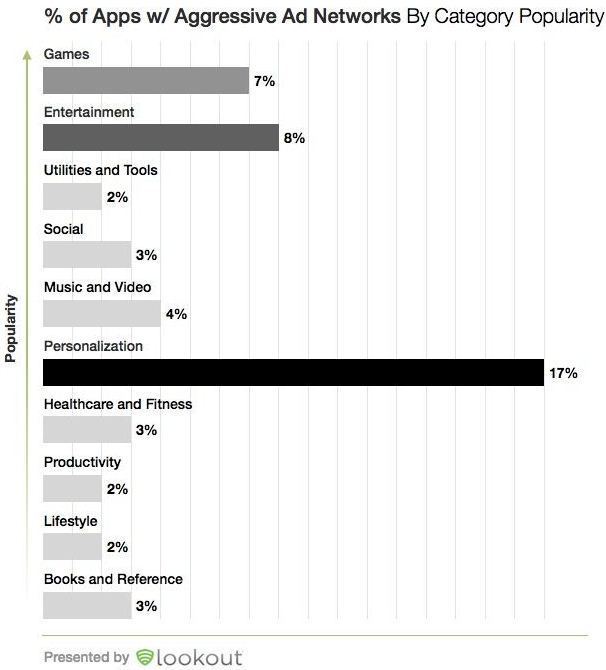
An analysis of free apps in GooglePlay showed that the leading user of aggressive ad networks was personalization apps , like wallpaper apps (17 percent), followed by entertainment (eight percent) and games (seven percent).
Lookout makes a free app that can downloaded from GooglePlay that identifies what ad networks are running on a phone and what they do.
The security vendor has also released a set of comprehensive guidelines for mobile advertisers. They outline "best practices" for the pitch firms to follow and govern transparency and clarity, individual control, ad delivery behavior, data collection and other topics.
In addition to collecting personal data from smartphones, ad networks have also been reported to push "scareware," such as battery upgrade warnings, and shove marketing icons onto a phone's start screen or advertising into its notification bar.
Source : PCWORLD

Thứ Năm, 5 tháng 7, 2012

iFAKE: Photos turn out to be shopped, and will iPhone 5 have a changeable camera lens?


IF your palms were getting all sweaty at the allegedly leaked pictures of the alleged iPhone 5 last month, you weren't the only one.
UPDATE: As the internet reels from being tricked again by the iPhone rumour brigade, even more details haves surfaced online, showing that Apple applied for a patent for a smartphone with a changeable camera.
is Apple really toying with the idea of letting picture-loving iPhone users change lenses on the iPhone 5, or are they just toying with our emotions?
Apple's application for a "back panel for a portable electronic device with different camera lens options" included a diagram reminiscent of an opened iPhone with labelled parts.
The application described a design to let users change lenses that typically are fixed in the backs of smartphones to act as eyes for cameras.
"It would be desirable to provide a structure for a compact device that allows the end user to reconfigure the optical arrangement of the device while retaining the benefits of assembling the device using a pre-assembled digital imaging subsystem," said a copy of the patent application available online.

The latest rumour comes as the web was tricked into thinking images of a potential iPhone prototype was real after some fairly convincing photos were published on Apple rumour site, 9to5Mac.

Thousands of people were tricked into thinking they were real.
Turns out the photos were renderings created by Flickr user, Martin Hajek based on alleged iPhone parts that were leaked by Apple rumour website, 9to5Mac.


Mr Hajek seemed pretty pleased with himself, boasting on Flickr that he'd even tricked Gizmodo into believing they were real.
"You would think Gizmodo of all blogs would be able to tell a leaked prototype from a leaked rendering!," he wrote on Flickr.
We'd like to join Mr Hajek on the high moral ground, but we too were one of the fooled.
Don't get excited. This is not an iPhone 5. It's a digital rendering based on 'leaked' iphone 5 parts. A fake, basically. Picture: 9to5mac


Thứ Tư, 4 tháng 7, 2012

6 Smartphone Fireworks Photo Tips


Great Smartphone Fireworks Photos: Six Tips and AppsSmartphone cameras have improved greatly since the days of grainy, blurry photos. But low-light photography remains a weak point for most smartphone cameras.
This Fourth of July, you’ll need a bit of help to get the best fireworks photos with your iPhone or Android smartphone. An important note: Be sure to read this story and test some phone-camera settings, or download an app or two, before you head off to the fireworks show.
[Using a stand-alone digital camera instead? Try "6 Tips for Exciting Fireworks Photos."]

Keep the Flash, and the HDR Setting, Off

Flashes on smartphones are not strong enough to work well even in small dark rooms, so having your flash on when you're shooting fireworks is pointless.
Also, you may be familiar with high dynamic range, a feature available on many modern smartphones that--in many cases--can help you get better photo results. Unfortunately HDR is not appropriate for shooting images of fireworks, since bursts of fireworks happen quickly, and taking long-exposure photos with HDR slows things down. Be sure to turn your phone's HDR option off.
If you have an Android phone, you will want to check a few other settings to see if they’re in order before the sun goes down.
  • If your phone camera has a stabilizer feature, turn it on.
  • If you can adjust the ISO sensitivity (which mimics film speeds on standard cameras), turn it up manually to around 400 for the best results.
  • Make sure that the camera is set to take photos at the highest resolution possible. This will produce larger files, but the difference in quality is worth the trade-off.

Use the Cortex Camera iPhone App

Cortex Camera photo comparisonCortex Camera photo comparisonIf you have an iPhone 4S (only) or a camera-equipped iPad with iOS 5,Cortex Camera ($3) can help you take some great photos in low-light conditions. Although it looks like a regular photo app, note that when you press the shutter button, you will need to hold the camera steady for 3 seconds.
Why do you have to hold it that long? Instead of taking an actual still photo, the app captures a short video consisting of more than 100 frames; it then builds noise-free, sharp low-light photos from the frames using a specially designed algorithm.

Use the Night Camera Android App

Settings for the Night Camera Android app.Settings for the Night Camera Android app.On Android, Night Camera (free, Pro $3) does a similar job by combining a special-exposure mode and software post-processing to reduce blur and improve the dynamic range of photos taken in low-light environments.
The app has several settings that you can adjust to capture the best night shots for the occasion, so you will want to experiment a bit ahead of time to get the right results for your phone.

Take Advantage of Burst Mode

If you have a certain Android or Windows phone, burst mode is a feature worth trying when you're snapping fireworks. This mode lets you take a series of shots quickly; afterward, you can pick the best photo from the series.
Both the Samsung Galaxy S III and the HTC One Android phones have this mode built in, but if your phone doesn't, try downloading Fast Burst Camera (Android) or Turbo Camera (Windows Phone), both of which offer a burst mode of sorts.
The Fast Burst Camera app ($3) is capable of taking 30 photos per second on high-end camera phones, and 5 to 10 photos per second on older or lower-end camera phones. It is an essential tool for capturing quick-moving, ephemeral subjects. Turbo Camera ($2) will let your Windows Phone take 14 to 16 frames per second.

Keep Steady and Avoid Digital Zoom

The Glif smartphone tripod mount hardware.The Glif smartphone tripod mount hardware.Having a steady camera is essential in low-light conditions. If you already own a tripod, you can buy a smartphone adapter such as theGlif to make your phone work with the tripod. The cost is around $20.
Not everyone wants to lug around a tripod, though. Instead, you can lessen your own movement by leaning against, say, a tree or a car when you're taking a photo. Or you can simply balance the phone on a wall, a table, or another nearby object.
Although photos you take with digital zoom on your phone might look okay on a small LCD, once you check them out on the big screen, you’ll notice that they are not as sharp and clear.
Using digital zoom is an easy way to ruin your shots or increase their graininess, as a photo loses quality with every zoom level. If you want to get a better close-up shot, you're better off physically moving closer to the subject with your phone rather than using its digital zoom.

Accessorize

An SLR lens mount for an iPhone essentially turns your iPhone into a DSLR.An SLR lens mount for an iPhone essentially turns it into a DSLR.If you want to take smartphone photography to the next level, you can find a bunch of accessories that promise to give you both the versatility of a phone and the quality of a DSLR camera.


Copy From : PCWORLD.COM